Categories
Real Estate in North Bend WAPublished March 10, 2026
What You Need To Know About Living On a Septic System

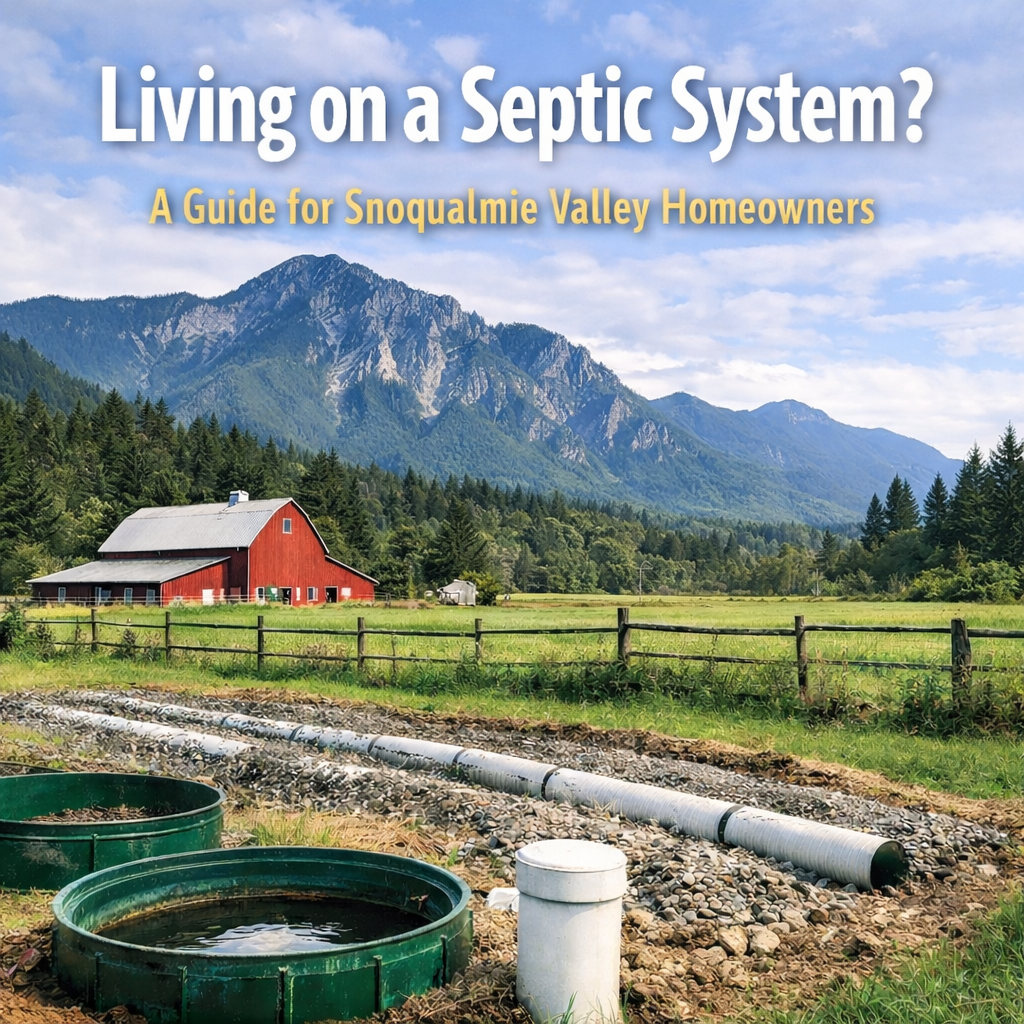
What You Need to Know About Living on Septic
A Snoqualmie Valley Homeowner’s Guide — By Sandy Navidi
If you’re considering a move to the Snoqualmie Valley—from North Bend to Duvall—one question almost always comes up early in the conversation:
“What does it mean to live on septic?”
For buyers coming from more urban areas, septic systems can feel like unfamiliar territory. But here in the Valley, they’re not the exception—they’re the norm. And when you understand how they work, they’re often simpler and more cost-effective than people expect.
As a local real estate expert specializing in Snoqualmie Valley properties, I guide buyers and sellers through septic systems all the time—what they are, how they function, and what to look for during a home purchase. Here’s what you need to know.
What Is a Septic System?
A septic system is a private, on-site wastewater treatment system used by homes not connected to municipal sewer lines.
Instead of sending waste to a city facility, your system handles everything right on your property through three key components:
The Septic Tank
An underground tank where wastewater separates—solids sink, oils rise, and liquid flows onward.
The Drainfield (Leach Field)
A network of pipes that disperses treated water into the soil for natural filtration.
The Soil
Often overlooked, but critical—soil in the Snoqualmie Valley plays a major role in safely filtering water before it returns to the groundwater system.
Because of the Valley’s lot sizes and soil composition, septic systems are not only practical—they’re often the best solution.
Why Septic Systems Are Standard in the Snoqualmie Valley
In communities like Carnation, Fall City, and throughout rural King County, development patterns look very different from dense urban areas.
Larger parcels, agricultural land, and geographic constraints make widespread sewer infrastructure less feasible. Many neighborhoods were developed before sewer systems expanded—so septic became the long-term solution.
Today, these systems are carefully regulated by King County to protect groundwater, local streams, and the Snoqualmie River system.
Simple Systems—With Smart Maintenance
Septic systems have a reputation for being complicated. In reality, they’re quite straightforward—and incredibly durable when maintained properly.
The key is consistency.
Most systems should be pumped every 3–5 years, depending on:
- Household size
- Tank capacity
- Water usage habits
- Garbage disposal use
Routine maintenance prevents solids from overflowing into the drainfield, which is where costly problems can arise.
In King County, periodic inspections are also required to ensure everything is functioning properly.
What Goes Down the Drain Matters
A septic system relies on natural bacteria to break down waste—so what you put into it matters.
Septic-safe:
- Human waste
- Toilet paper
- Standard household wastewater
Avoid:
- “Flushable” wipes (they’re not actually septic-safe)
- Grease and oils
- Harsh chemicals
- Feminine hygiene products
- Paper towels
- Excess food waste
These can clog the system or disrupt the biological process that keeps everything working efficiently.
Protecting Your Drainfield
The drainfield is the most valuable part of your septic system—and also the most expensive to repair.
Fortunately, protecting it is simple:
- Don’t drive or park on it
- Keep large trees and roots away
- Direct water runoff elsewhere
- Avoid building over it
In many Snoqualmie Valley properties, the drainfield is naturally protected by open yard space—a built-in advantage of larger lots.
Septic Inspections When Buying or Selling
In King County, a septic inspection is required within one year of a home sale.
This inspection ensures:
- The system is functioning properly
- It’s correctly sized for the home
- There are no signs of failure
Here’s what many people don’t realize:
A system can appear to work fine—and still be failing.
That’s why inspections are critical. In fact, homes with failing septic systems typically cannot be financed, meaning only cash buyers can move forward unless repairs are completed.
The Bottom Line
Living on septic isn’t a drawback—it’s simply part of life in the Snoqualmie Valley.
With proper care, these systems can last for decades, and many homeowners appreciate the independence and cost savings compared to monthly sewer bills.
The key is understanding what you’re buying—and that’s where local expertise makes all the difference.
Work With a Local Expert
Navigating septic systems, rural properties, and Valley-specific regulations requires more than a general understanding—it takes local knowledge.
As someone who specializes in Snoqualmie Valley real estate, I help my clients not just find the right home—but fully understand how everything on that property works.
Because confidence in your purchase starts with clarity.
|


or another way